
Not as filler between “spiritual moments,” not as background noise until something dramatic happens—but as a place where God is already present, already speaking, already forming people.
We often assume the meaningful parts of faith are the big ones: miracles, callings, breakthroughs, mountaintop clarity. But the Bible keeps returning to something far more grounded. Bread being broken. Water being drawn. Fields being harvested. Meals being shared. People walking dusty roads with God in conversation and not always realizing the weight of what’s happening in the simplicity of it all.
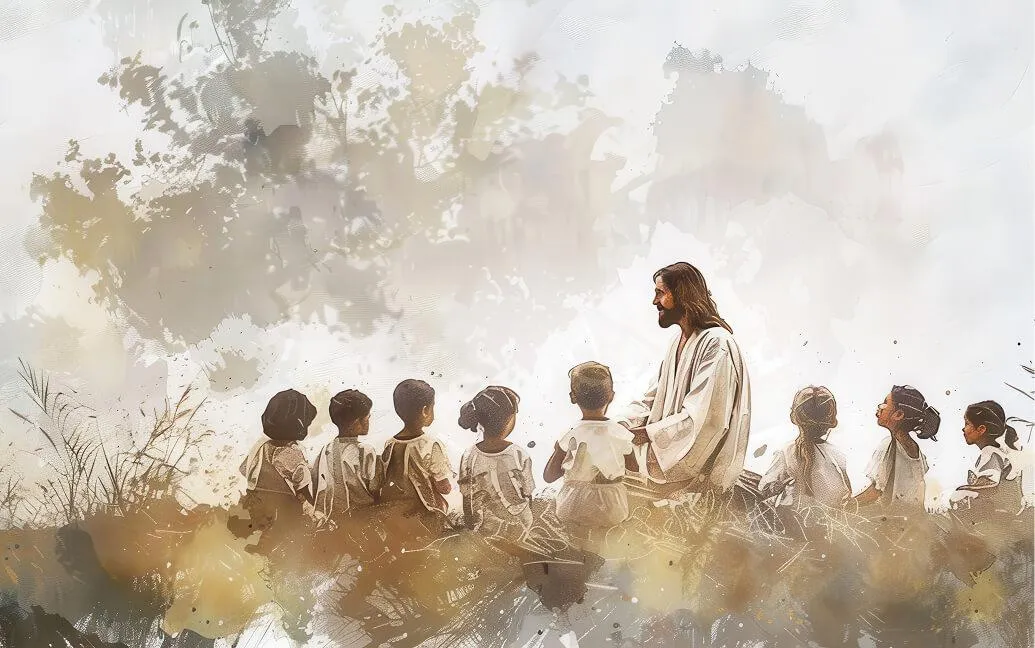
Take Jesus Himself. So much of His life is startlingly ordinary on the surface. He eats with people. Attends weddings. Walks from town to town. Sits by wells. Tells stories about farming, cooking, and household rhythms. He reveals the kingdom not only in dramatic miracles, but in everyday images people already understand. The sacred is not separated from ordinary life—it’s embedded within it.
There’s a quiet correction in that for how we tend to think. We often assume life only becomes meaningful when it feels significant. But Scripture resists that idea. God forms people in repetition. In daily bread. In regular prayer. In rhythms of obedience that don’t always feel emotionally intense but are deeply formative over time.
Even creation itself reflects this. Sunrise after sunrise. Seasons that return. Oceans that move in steady patterns. None of it is rushed, yet none of it is meaningless. There is a kind of divine patience in how God sustains ordinary cycles rather than replacing them with constant excitement.
This is where attention becomes spiritual practice. Not trying to force meaning into every moment, but learning to recognize what is already there.
A meal becomes more than routine when you realize provision is embedded in it. A conversation becomes more than passing time when you recognize connection is being formed. A walk becomes more than movement when you notice presence—yours, and God’s—quietly accompanying it.
Jesus’ own life affirms this. He does not bypass ordinary human experience. He enters it fully. He grows up in a home, works with His hands, experiences fatigue, attends gatherings, and participates in the slow unfolding of human life. That alone reshapes how we view the everyday. It means God is not distant from it—He inhabits it.
There’s also a gentleness to this way of seeing. It removes the pressure that every moment has to be extraordinary to matter. Instead, it invites a deeper kind of awareness: that what is consistent is not less spiritual than what is dramatic. It is often where faith becomes most real.
In that sense, ordinary days are not empty spaces between meaningful ones. They are the very place where life is being lived and shaped.
And maybe the invitation is not to chase more intensity, but to become awake to presence in what is already here.
Because if God is truly present in all things, then the ordinary is never truly ordinary; it is always an invitation to encounter His presence.
Sources
- Luke 10:38–42 (Jesus in the ordinary home setting with Mary and Martha)
- Matthew 6:11 (“Give us this day our daily bread”)
- John 4:6–7 (Jesus at the well, in an everyday setting)
- Luke 24:30–31 (revelation in the breaking of bread)
- Genesis 1 (rhythms of creation and ordered time)
- Mark 6:3 (Jesus described as a carpenter, rooted in ordinary labor)
- Ecclesiastes 3:1 (seasonal rhythms of life)