
“Whatever is true, whatever is noble, whatever is right, whatever is pure, whatever is lovely, whatever is admirable—think about such things.” — Philippians 4:8
We live in a world where our attention is constantly being pursued. Notifications flash. Videos autoplay. News cycles never stop. We scroll through curated lives, endless opinions, and streams of information that fill every quiet moment.
Yet beneath the noise lies a deeper question:
What is all of this doing to our imagination?
The imagination is often misunderstood as fantasy or escape. But in a deeper biblical and theological sense, it is the inward faculty through which we perceive meaning, form inner vision, and understand ourselves before God. It is where perception becomes interpretation.
Long before outward behavior is formed, the imagination has already been shaped.
If it is saturated with fear, we begin to expect disaster. If it is shaped by comparison, we begin to see ourselves as lacking. If it is trained by constant consumption, we begin to lose the capacity for stillness and interior awareness.
What we behold repeatedly, we gradually become.
This is why Scripture is not only concerned with action, but with vision.
“The eye is the lamp of the body” (Matthew 6:22). “Set your minds on things above” (Colossians 3:2). “I have set the Lord always before me” (Psalm 16:8).
These are not abstract commands. They are invitations to reorient the inner life.
In the modern digital world, attention is continually fragmented. The imagination is filled with rapid images, curated identities, and emotionally charged narratives. Over time, this can weaken our capacity for silence, reflection, and presence.
The issue is not simply screens themselves, but formation. Every system of attention is also a system of discipleship.
Yet the answer is not withdrawal from the world.
The answer is redemption.
A redeemed imagination does not escape reality; it sees reality rightly. It learns to perceive life through the presence of God rather than the distortion of fear.
It begins to see the self not through comparison, but through divine belonging. It begins to see others not as competitors, but as image-bearers. It begins to see circumstances not as chaos, but as places where God is still present and active.
This is the healing work of attention.
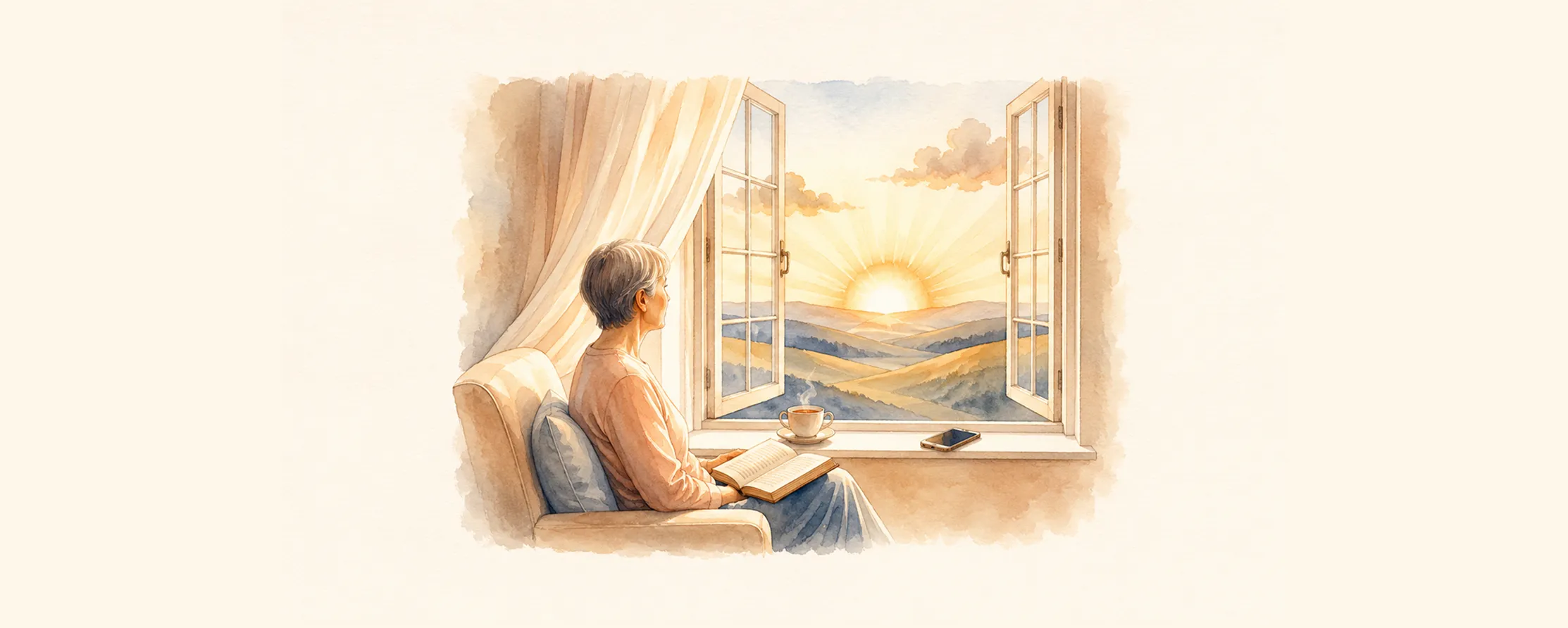
When we return to Scripture, to silence, to prayer, and to beauty, something in the imagination begins to re-align. The inner world becomes less reactive and more receptive.
We begin to recover the capacity to behold God in the ordinary.
And in that beholding, we are slowly changed.
For what we continually behold, we become.
Sources
- Leanne Payne, The Healing Presence
- Leanne Payne, Restoring the Christian Soul
- Leanne Payne, Real Presence