
The shelves stretch higher than you can see, filled with stories worn soft by countless hands. The scent of aged pages fills the room, and the quiet hum of the storm outside makes the world feel far away. You pull a weathered book from the shelf, its cover faded and its edges softened by time, and you settle into a chair beside the window.
As you open the book, you meet a young traveler who has lost their way in a dark forest.
The path beneath their feet is covered with tangled roots. The trees seem endless. The sky grows heavy with clouds, and every step feels uncertain. The traveler cannot see beyond the next bend in the trail. They do not know where the road leads or why they have been brought through this wilderness.
If you closed the book on that chapter, you might wonder if the story would ever become beautiful again.
But the story is not finished.
You keep turning the pages.
Soon, you discover that the forest was leading somewhere all along. Beyond the trees is a breathtaking meadow the traveler never knew existed. The storm that once seemed cruel watered the flowers that would later mark the path home. The darkness that felt like abandonment was actually guiding the traveler toward something greater.
The traveler never saw it while they were walking through the woods.
Neither do we.
So much of life feels like reading only one page of a story whose ending has already been written. We look at one chapter and assume we understand the entire book. We see disappointment and assume God has forgotten us. We see delays and assume He is not moving. We see loss and wonder if something beautiful can ever come from the ashes.
But God sees every page at once.
“For My thoughts are not your thoughts, neither are your ways My ways, declares the Lord. For as the heavens are higher than the earth, so are My ways higher than your ways and My thoughts than your thoughts.”
— Isaiah 55:8–9
What we call waiting, God may call preparation.
What we call an ending, God may be beginning something new.
What we call hiddenness, God may be using to grow roots deeper than we can see.
Think about a seed buried beneath the soil.
If the seed could speak, perhaps it would wonder why it had been placed in darkness. The warmth of the sun has disappeared. The world it once knew is gone. Pressure surrounds it, and it may feel as though everything has fallen apart.
Yet the gardener knows.
The seed is not being buried to be forgotten.
It is being planted to become something new.
Jesus spoke of this mystery when He said:
“Unless a grain of wheat falls into the earth and dies, it remains alone; but if it dies, it bears much fruit.”
— John 12:24
God often does His deepest work in places we cannot see.
We celebrate blossoms, but God is faithful in the roots.
We admire fruit, but God is patient in the hidden growth beneath the surface.
This is why Paul reminds us:
“For we walk by faith, not by sight.”
— 2 Corinthians 5:7
Faith does not mean pretending the forest is not dark. Faith means trusting the One who is leading you through it.
C.S. Lewis beautifully captured this reality in The Voyage of the Dawn Treader. As the characters sail farther into unknown waters, they encounter uncertainty, fear, and moments when they cannot see what lies ahead. They must continue forward, not because they understand the journey, but because they trust Aslan.
One of the most comforting reminders throughout Lewis’ writings is the phrase:
“Courage, dear heart.”
It is a reminder that we are not abandoned in the unknown. Even when we cannot see the shore, the One guiding the journey has not lost His way.
Lewis also explores this truth in The Horse and His Boy. Shasta spends much of his journey believing he is alone and that the frightening moments along his path are meaningless. But later, he discovers that the Lion he feared was actually the One who had been protecting, pursuing, and guiding him all along.
Aslan tells him:
“I was the lion.”
The moments Shasta thought were random were actually moments of loving direction.
How often is that our story?
We see detours.
God sees direction.
We see unanswered prayers.
God sees a heart being formed.
We see closed doors.
God sees protection and preparation.
We do not need to know the entire story to have peace.
We often want God to hand us the whole book. We want to know every reason, every outcome, and every detail before we trust Him. But God rarely gives us the entire story at once. Instead, He invites us to trust Him one page at a time.
And maybe that is because knowing the ending was never meant to be our source of peace.
Knowing the Author is.
We know the One who holds the pen.
We know His character.
We know His goodness.
We know that He is faithful.
The same God who was writing redemption through Joseph’s betrayal, David’s wilderness, Ruth’s loss, and the disciples’ darkest moment at the cross is still writing today.
What looked like the end for the disciples was actually the beginning of resurrection.
What looked like defeat was victory.
What looked like silence was God preparing a miracle.
“And we know that for those who love God all things work together for good, for those who are called according to His purpose.”
— Romans 8:28
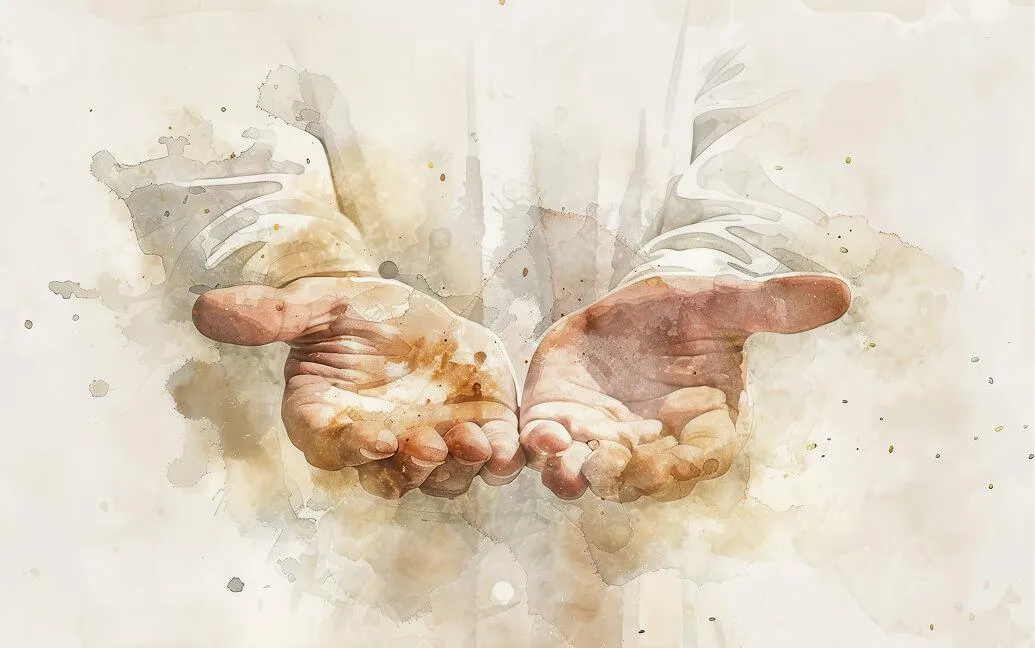
One day, we will look back and see that the chapters we questioned were the very places where God was working the most deeply. We will see that the moments we thought were forgotten were actually being woven together by the hands of a loving Father.
Until then, we keep turning the page.
Not because we know what comes next.
But because we know the One who is writing the story.
The page you are reading may be filled with questions.
It may feel unfinished.
It may not look anything like what you imagined.
But the Author is still writing.
And if we trust the Author, we can trust the story.