

Joy is often spoken about as something to pursue, but in practice it is something many people quietly resist. Not because they do not want healing, but because joy requires a kind of inner surrender that can feel unfamiliar, even unsafe. It asks the heart to loosen its grip on control, and for many, control has become the primary way of staying steady in life.
Leanne Payne wrote extensively about the healing of the human soul as the restoration of communion with the living presence of Christ. In that vision, joy is not an emotional layer added onto a functioning life. It is the natural outcome of a person becoming reoriented toward God’s nearness. When that nearness is received, something begins to shift internally—fear loses its authority, and self-protection is no longer the governing force.
This is where resistance often begins.
Many people do not resist joy directly. They resist what joy requires. Joy asks the inner life to stop rehearsing absence and begin recognizing presence. For someone shaped by grief, trauma, or prolonged disappointment, absence can feel more reliable than presence. Sorrow becomes familiar. Vigilance becomes a form of safety. Even emotional numbness can begin to feel like stability.
So joy can feel disruptive—not because it is harmful, but because it interrupts what has been built for survival.
Payne’s framework helps name this dynamic clearly: the human person can develop inward patterns that, while protective, begin to distort perception. The imagination becomes trained to expect loss rather than life, distance rather than nearness, and self-protection rather than trust. In that condition, joy does not feel like freedom. It feels like exposure.
This is why joy can be unsettling. It challenges the internal systems that were designed to prevent pain.
And yet Scripture speaks directly into this tension:
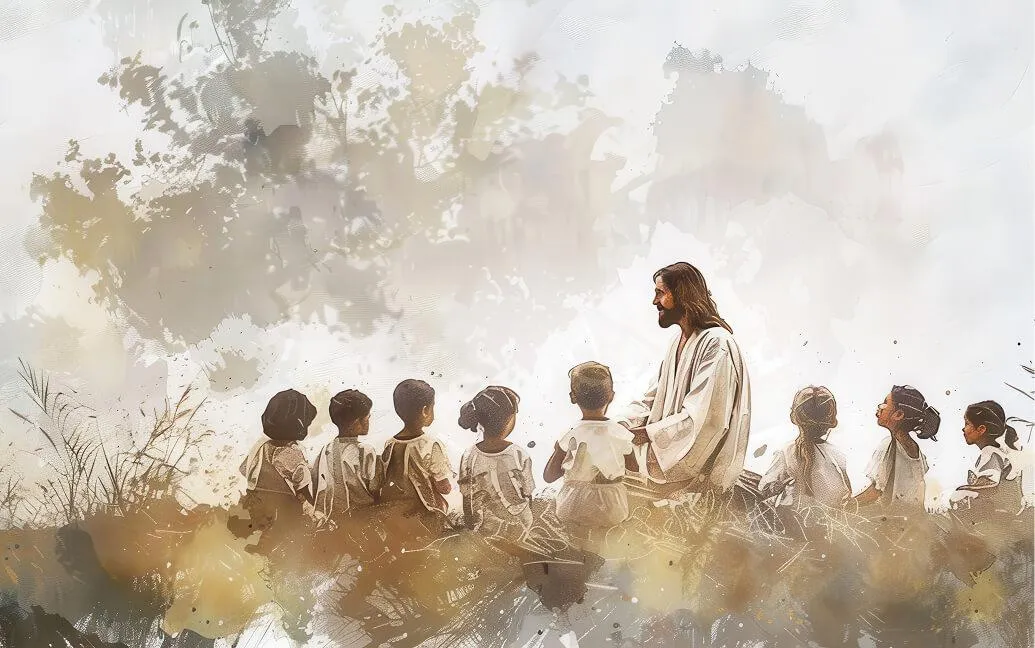
“Come to me, all who labor and are heavy laden, and I will give you rest.” (Matthew 11:28)
Rest in this sense is not merely physical relief. It is the invitation into a different interior posture—one where the weight of self-managed survival is no longer carried alone. Yet receiving that invitation requires a willingness to loosen the habits of striving and guarding that once felt necessary.
To receive joy is to accept that life is not only what has been endured, but also what is being given. It is to step out of an interpretation shaped entirely by past wounds and into a present reality that is not defined by them. That shift is subtle, but deeply disruptive to long-standing internal patterns.
This is why joy often arrives quietly at first. Not as overwhelming emotion, but as small interruptions of peace that feel almost unfamiliar. A moment of laughter that is not immediately followed by caution. A breath that feels unguarded. A sense of goodness that is not yet fully analyzed or questioned.
Leanne Payne often emphasized the healing of perception itself—the sanctified imagination becoming capable of receiving reality as it is in Christ, rather than through the lens of fear or fragmentation. In that sense, joy is not manufactured optimism. It is a form of restored sight.
Still, resistance can remain even in sincere faith. Not because a person is unwilling, but because parts of the heart still associate openness with risk. So joy is often received in fragments before it is trusted fully.
Over time, something begins to change. The internal story that says, “If I open myself, I will lose something,” is slowly challenged by lived experience. A new reality is learned—not instantly, and not abstractly—but through encounter: openness does not always lead to loss. Sometimes it leads to communion.
This is the slow work behind joy.
Not the production of a feeling, but the restoration of trust in presence. Not the denial of sorrow, but the integration of sorrow within a larger reality that is not ruled by it. And in that place, joy is no longer something resisted. It becomes something received—carefully at first, then more freely, as the heart learns it is safe to live unguarded before God.
Sources
- Leanne Payne, The Healing Presence; Restoring the Christian Soul Through Healing Prayer
- C.S. Lewis, Mere Christianity
- The Holy Bible (ESV), Matthew 11:28